Clara Krause · 24 September 2026
Uncovering How Underwater Rock Formations Alter Wave Breaks for Surfers Navigating Sheltered Northern Inlets
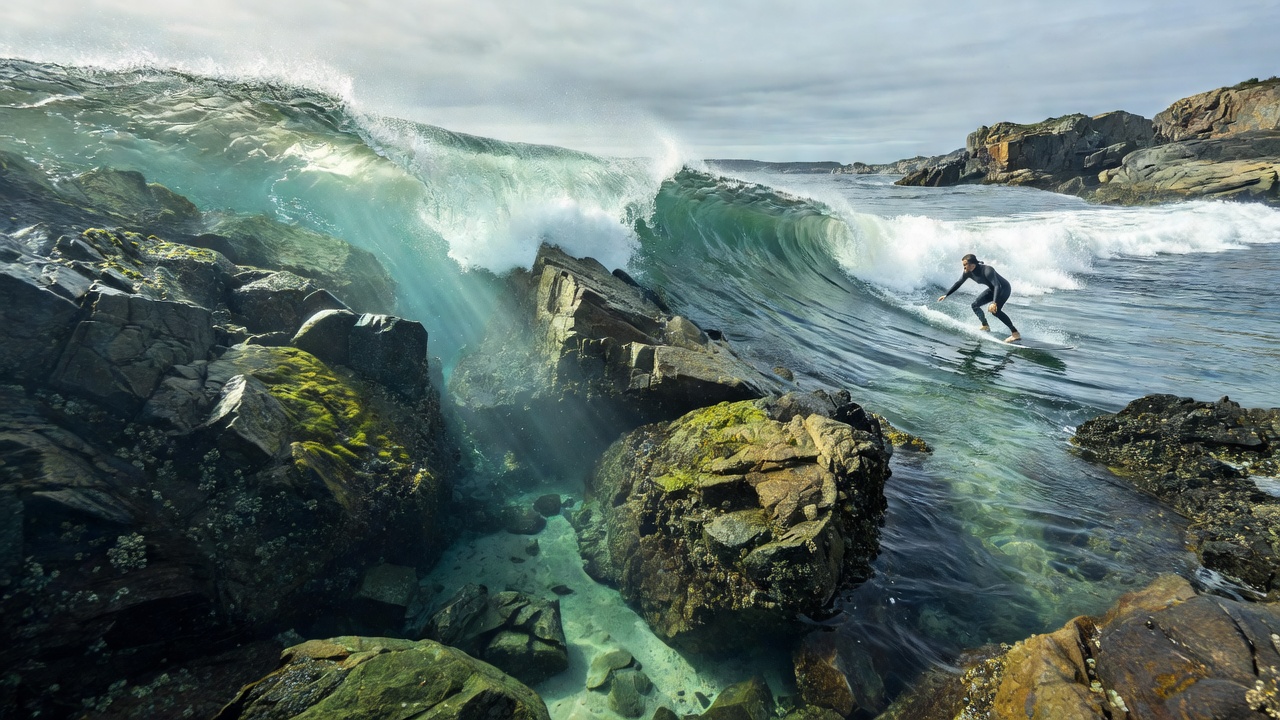
Submerged rock formations reshape wave propagation in sheltered northern inlets through refraction, diffraction and localized shoaling, and these interactions determine where waves break with sufficient power for surfing while creating variable conditions that demand precise timing and positioning.
Bathymetric Influences on Wave Behavior
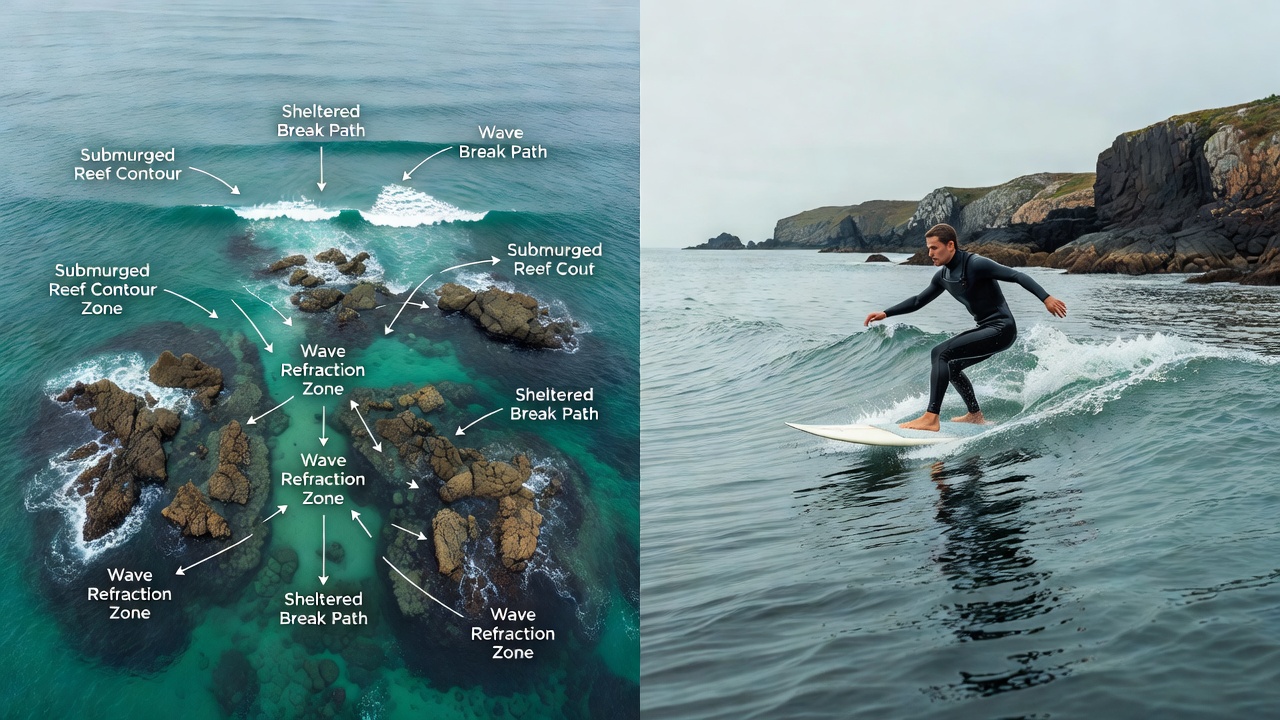
Rock ledges and outcrops on the seabed interrupt wave trains as they enter protected waters, and the resulting energy redistribution produces focused peaks or sudden lulls depending on the angle of approach and water depth over each formation. Observers note that steeper gradients along submerged ridges accelerate wave steepening, whereas broader plateaus spread energy across wider zones and reduce breaking intensity. Data from bathymetric surveys indicate that even modest elevation changes of two to three meters can shift the primary break point by tens of meters along the shoreline. Researchers at institutions studying northern coastal systems have mapped these features using multibeam sonar, revealing patterns that repeat across multiple inlets when similar rock geometry appears.
Refraction, Diffraction and Energy Focusing
Waves encountering underwater obstacles bend around the edges through diffraction while refraction bends crests toward shallower zones above rock crests, and the combined effect concentrates swell energy at specific locations that surfers learn to anticipate. In narrow inlets the channel walls further constrain wave paths, so that a single prominent rock formation can generate a predictable left or right peel that remains rideable for several seconds longer than surrounding areas. Studies conducted along Scandinavian and North American northern coasts show that wave periods between eight and twelve seconds interact most noticeably with rock fields lying between five and fifteen meters below the surface. Those intervals allow enough time for refraction to develop fully before the wave reaches the inner basin, producing the clean lines sought by local riders.
Seasonal and Tidal Modulations
Tidal stage alters the effective depth over rock formations, and spring low tides expose more of the structure while neap highs submerge it further, changing the refraction angle each day. September conditions often bring moderate swells from distant storms that arrive with consistent directionality, allowing the underlying topography to exert a stronger influence than during the more chaotic winter months. Ocean Networks Canada maintains sensor arrays that record these tidal and wave interactions in real time, providing datasets that surfers and coastal planners consult when planning sessions or infrastructure projects. The interplay between tidal range and rock elevation creates windows of opportunity that narrow or widen within a single tidal cycle, requiring constant recalibration of takeoff zones.
Practical Navigation for Surfers
Local knowledge of rock placement helps riders identify safe entry and exit channels, and many groups maintain informal maps that mark both productive peaks and hidden hazards. Buoy data combined with visual cues such as surface boils or foam lines reveal the presence of shallower rock when swell arrives, and experienced participants time their paddling to align with the refracted peaks rather than fighting the lulls between them. In September 2026 a coordinated field campaign by several northern research stations will deploy additional pressure sensors around known rock fields to refine predictive models, and the resulting information is expected to improve both safety briefings and wave-forecast products used by the surfing community.
One documented case along a Canadian inlet demonstrated that repositioning a take-off spot by fifteen meters to account for a newly charted ledge increased ride length by nearly twenty percent during a moderate swell event. Similar observations from Norwegian fjord mouths indicate that rock-induced focusing can produce brief but powerful sections even when the overall wave height remains modest, giving riders opportunities that open-ocean forecasts alone would not predict.
Conclusion
Underwater rock formations therefore function as fixed controls on wave breaking within sheltered northern inlets, and their effects integrate with tidal, seasonal and swell-direction variables to shape daily conditions. Continued mapping and sensor deployment will supply increasingly precise data that supports both recreational use and coastal management decisions across these environments.